



Sodium Channel
Na channels; Na+ channels
Sodium channels are integral membrane proteins that form ion channels, conducting sodium ions (Na+) through a cell's plasma membrane. They are classified according to the trigger that opens the channel for such ions, i.e. either a voltage-change (Voltage-gated, voltage-sensitive, or voltage-dependent sodium channel also called VGSCs or Nav channel) or a binding of a substance (a ligand) to the channel (ligand-gated sodium channels). In excitable cells such as neurons, myocytes, and certain types of glia, sodium channels are responsible for the rising phase of action potentials. Voltage-gated Na+ channels can exist in any of three distinct states: deactivated (closed), activated (open), or inactivated (closed). Ligand-gated sodium channels are activated by binding of a ligand instead of a change in membrane potential.
Sodium Channel Isoform Specific Products
-
Sodium Channel
(632)
View all products
-
Nav1.1
(12)
View all products
-
Nav1.2
(18)
View all products
-
Nav1.3
(16)
View all products
-
Nav1.4
(15)
View all products
-
Nav1.5
(27)
View all products
-
Nav1.6
(13)
View all products
-
Nav1.7
(63)
View all products
-
Nav1.8
(42)
View all products
-
Nav1.9
(3)
View all products
All Product Categories
-
Sodium Channel Inhibitors
(633)
View all products
-
Sodium Channel Agonists
(10)
View all products
-
Sodium Channel Antagonists
(29)
View all products
-
Sodium Channel Activators
(35)
View all products
-
Sodium Channel Modulators
(30)
View all products
-
Sodium Channel Controls
(5)
View all products
-
Sodium Channel Ligands
(3)
View all products
-
Sodium Channel Related Products (815)
Related Products (815)

-
Antibodies (9)
-
Related Compound Screening Libraries (1)
-
Sodium Channel Isoform Comparison
-
Nifedipine hydrochloride
 0 ImagesCat. No.: HY-B0284ACAS No.: 60299-11-8Nifedipine hydrochloride is a potent vasodilator with calcium antagonist activity. Nifedipine hydrochloride is a useful antianginal compound that can also lower blood pressure. Nifedipine hydrochloride exhibits comparable antihypertensive properties to some new compounds, especially in calcium channel blockade. Nifedipine hydrochloride is used in biological activity studies to develop new antihypertensive and/or antianginal compounds.
-
Jasmolin II
 0 ImagesCat. No.: HY-W740651CAS No.: 1172-63-0Jasmolin II is an insecticide targeting voltage-gated sodium channels in insects. Jasmolin II leads to neuronal hyperexcitation and insect paralysis. Jasmolin II is promising for research of agricultural pests.
-
Etidocaine
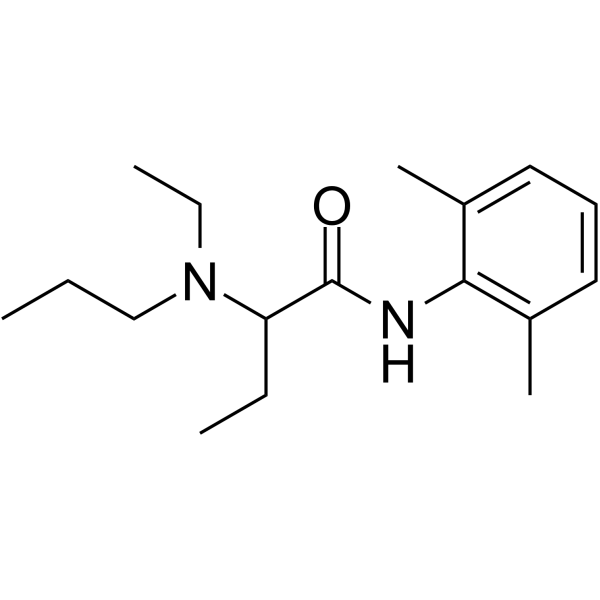 0 ImagesCat. No.: HY-B2080CAS No.: 36637-18-0Synonyms: EDCEtidocaine (EDC) is a long aminoamide local anesthetic.
-
Nav1.8-IN-13
 0 ImagesCat. No.: HY-161572CAS No.: 2785391-79-7Nav1.8-IN-13 (compound 16) is a Nav1.8 inhibitor (pIC50=7.9).
-
GpTx-1
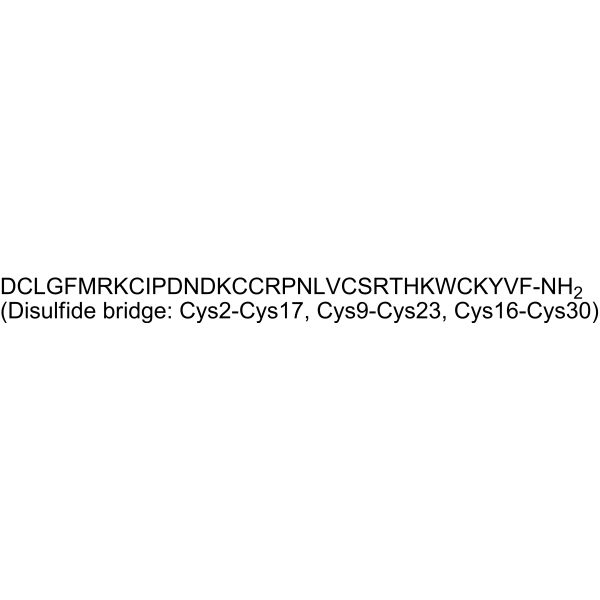 0 ImagesCat. No.: HY-P1681CAS No.: 1661050-12-9GpTx-1 is a peptide-based NaV1.7 sodium channel antagonist isolated from the venom of the Chilean spider Grammostola porter. GpTx-1 demonstrates potent inhibitory activity against the NaV1.7 channel with an IC50 value of 10 nM, while exhibiting excellent selectivity for NaV1.4 (IC50 = 0.301 μM) and NaV1.5 (IC50 = 4.20 μM), showing >20-fold and >950-fold selectivity respectively.
-
Ropivacaine-d7 hydrochloride
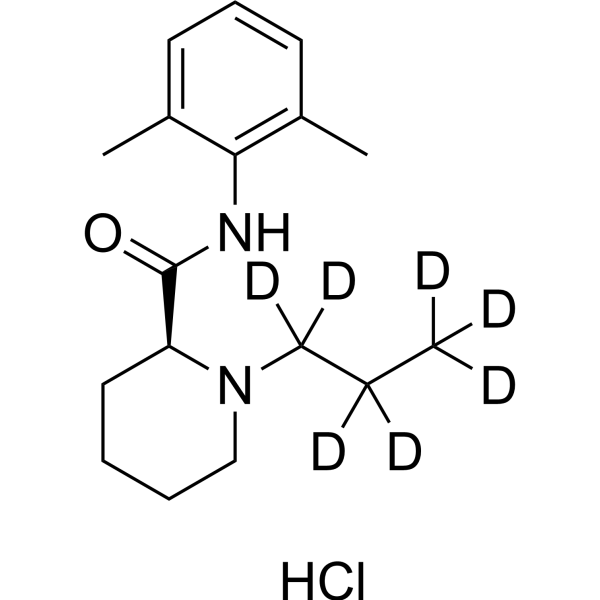 0 ImagesCat. No.: HY-B0563BSCAS No.: 1217667-10-1Ropivacaine-d7 hydrochloride is a deuterium labeled Ropivacaine (hydrochloride) (HY-B0563B). Ropivacaine hydrochloride is a potent sodium channel blocker and blocks impulse conduction via reversible inhibition of sodium ion influx in nerve fibrese. Ropivacaine is also an inhibitor of K2P (two-pore domain potassium channel) TREK-1 with an IC50 of 402.7 μM in COS-7 cell's membrane. Ropivacaine is widely used for neuropathic pain management in vivo.
-
BI 1265162
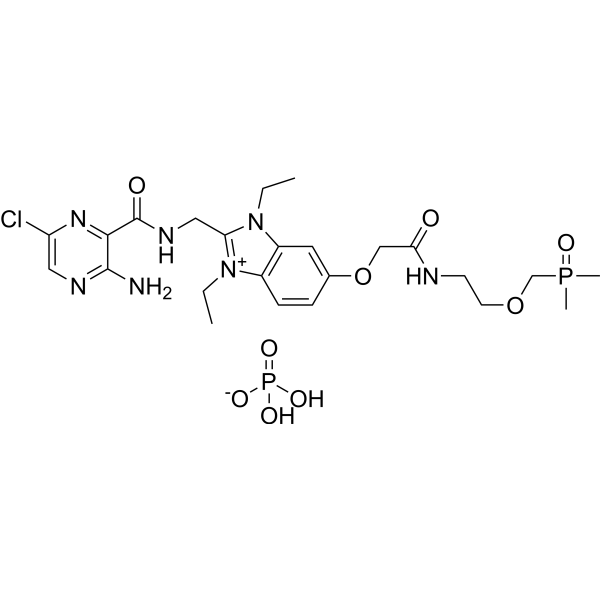 0 ImagesCat. No.: HY-161085CAS No.: 3042822-44-3BI 1265162 is a potent inhibitor of endothelial sodium channel (ENaC) that plays an important role in cystic fibrosis research.
-
VGSC blocker-1
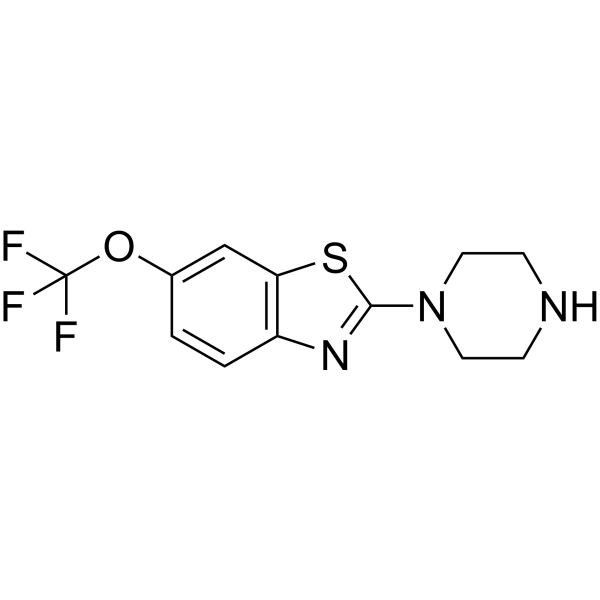
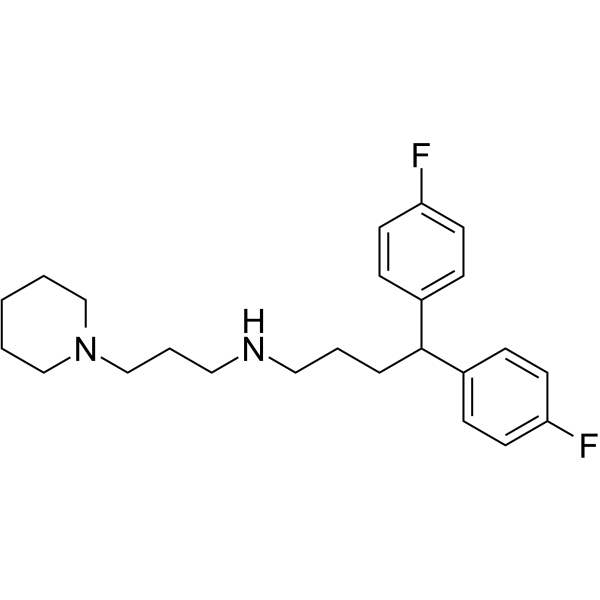 0 ImagesCat. No.: HY-126005CAS No.: 2230472-55-4
-
Jingzhaotoxin-IX
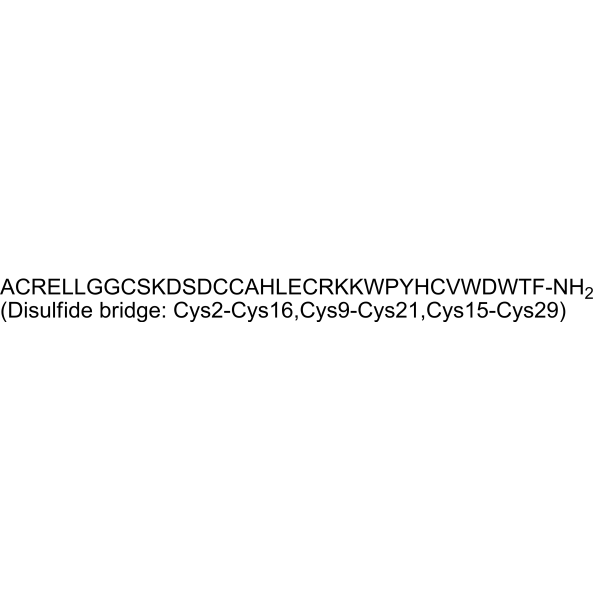
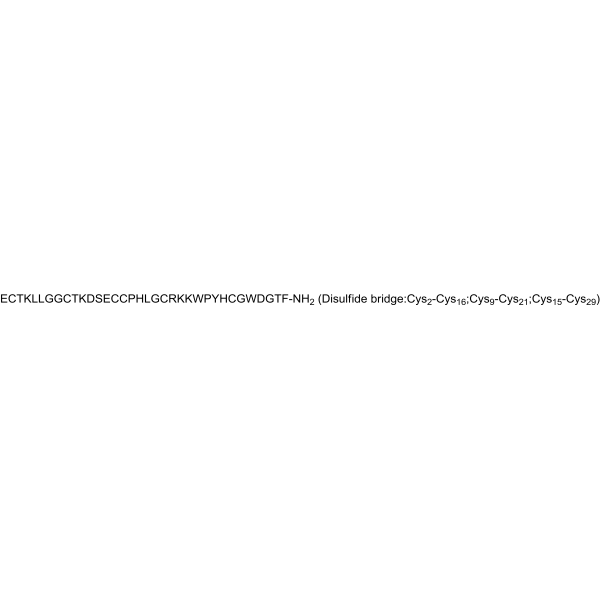 0 ImagesCat. No.: HY-P5771Jingzhaotoxin-IX, a C-terminally amidated peptide composed of 35 amino acid residues, is a neurotoxin. Jingzhaotoxin-IX inhibits voltage-gated sodium channels (both tetrodotoxin-resistant and tetrodotoxin-sensitive isoforms) and Kv2.1 channel. Jingzhaotoxin-IX has no effect on delayed rectifier potassium channel Kv1.1, 1.2 and 1.3.
-
Articaine hydrochloride (Standard)
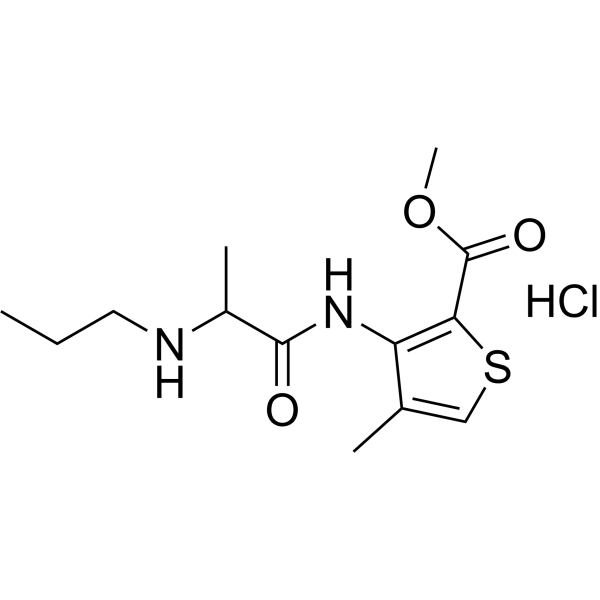 0 ImagesSynonyms: Hoe-045 (Standard)Articaine (Hoe-045) hydrochloride (Standard) is the analytical standard of Articaine hydrochloride (HY-B0516). This product is intended for research and analytical applications. Articaine (Hoe-045) hydrochloride is a selective inhibitor of voltage-gated sodium channels (such as rNav1.4, hNav1.7, and rNav1.8), with an IC50 of 15.8 μM for open-state Na+ channels, and IC50 of 40.6 μM and 378 μM for inactivated and resting-state Na+ channels, respectively. Articaine hydrochloride exerts local anesthetic activity by inhibiting Na+ influx to block nerve impulse conduction, and can also inhibit NF-κB activation and NLRP3 inflammasome pathways, exhibiting anti-inflammatory function. Articaine hydrochloride can be used in the study of dental local anesthesia and inflammatory-related diseases (such as acute kidney injury).
-
mHuwentoxin-IV
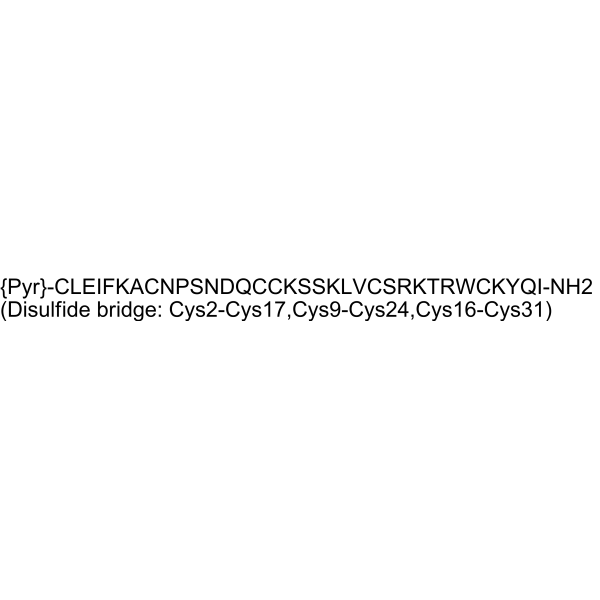 0 ImagesCat. No.: HY-P5868mHuwentoxin-IV is a naturally modified Huwentoxin-IV (HY-P1220). mHuwentoxin-IV inhibits tetrodotoxin-sensitive (TTX-S) voltage-gated sodium channels of dorsal root ganglion neurons with an IC50 of 54.16 nM. mHuwentoxin-IV inhibition of tetrodotoxin-sensitive sodium channels is not reversed by strong depolarization voltages.
-
Jingzhaotoxin-III
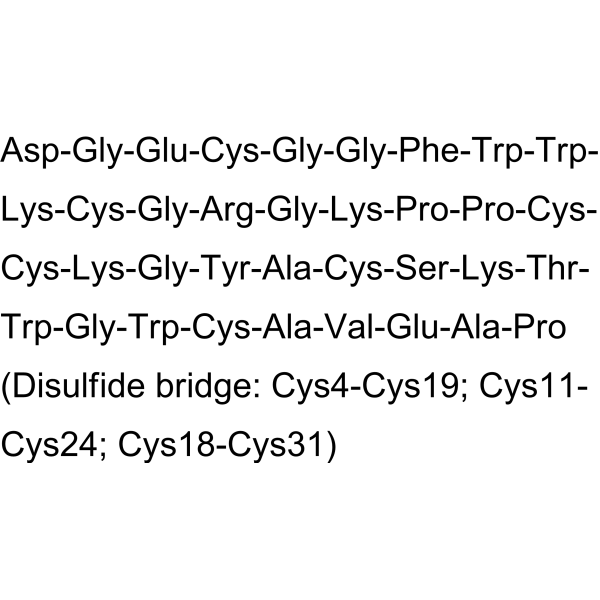 0 ImagesCat. No.: HY-P1219CAS No.: 925463-91-8Synonyms: β-TRTX-Cj1αJingzhaotoxin-III is a potent and selective blocker of Nav1.5 channels, with an IC50 of 348 nM, and shows no effect on other sodium channel isoforms. Jingzhaotoxin-III can selectively inhibit the activation of cardiac sodium channel but not neuronal subtypes, and hopefully represents an important ligand for discriminating cardiac VGSC subtype.
-
Anti-SLC34A2 (Lifastuzumab)-MC-Vc-PAB-SN38
 0 ImagesCat. No.: HY-171738Anti-SLC34A2 (Lifastuzumab)-MC-Vc-PAB-SN38 is an antibody-drug conjugate (ADC) consisting of the humanized anti-SLC34A2 (sodium-dependent phosphate transporter 2) antibody Lifastuzumab (HY-P99970) conjugated to the linker Mc-VC-PAB and the topoisomerase I inhibitor SN38 (HY-13704). The ADC toxic molecule and linker part are Mc-VC-PAB-SN38 (HY-131057). Anti-SLC34A2 (Lifastuzumab)-MC-Vc-PAB-SN38 can be used in cancer research.
-
Antho-Rwamide II
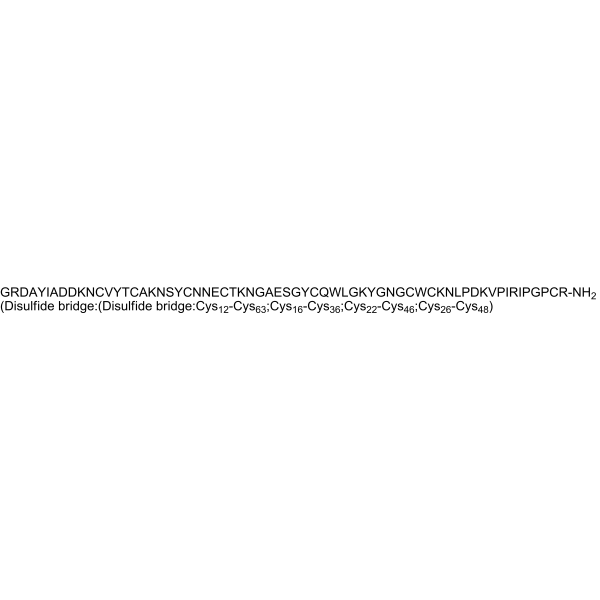
 0 ImagesCat. No.: HY-P10595CAS No.: 118904-15-7Antho-Rwamide II is a neuropeptide that can be isolated from the sea anemone Anthopleura elegantissima. Antho-Rwamide II can induce contraction of the endothelial muscles of the sea anemone and participate in neurotransmission. Antho-Rwamide II can be used to explore the function of the nervous system in invertebrates.
-
Aneratrigine hydrochloride
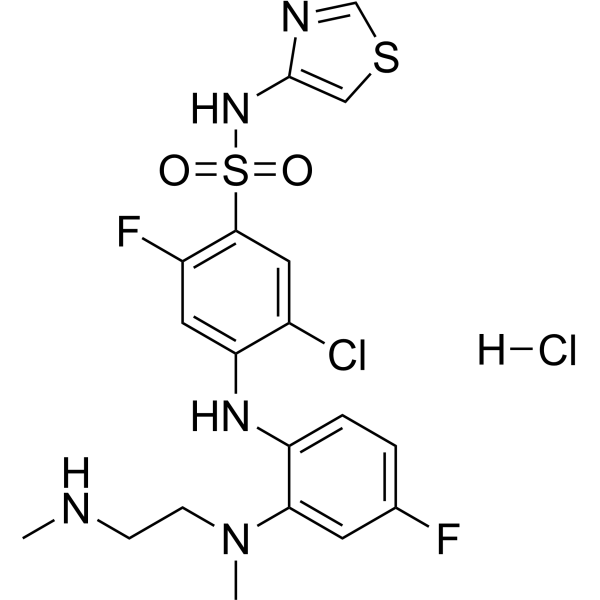 0 ImagesCat. No.: HY-156596ACAS No.: 2097163-75-0Aneratrigine hydrochloride is a selective Nav1.7 inhibitor with an IC50 of 19 nM. Aneratrigine hydrochloride is applicable for pain-related research.
-
Transcainide
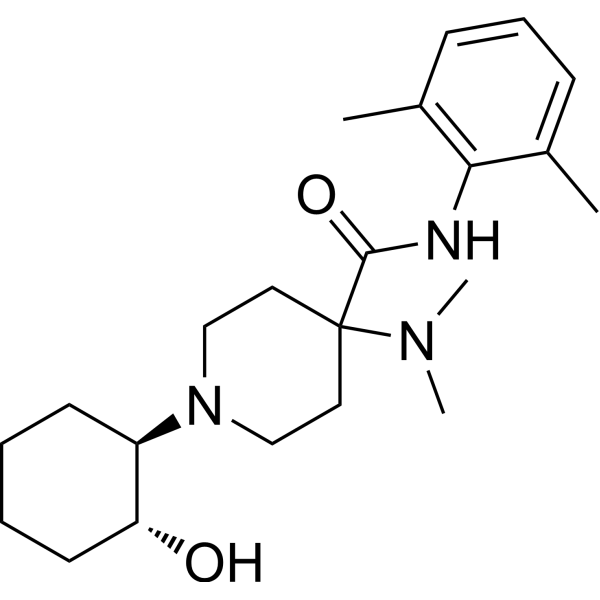 0 ImagesCat. No.: HY-123427CAS No.: 88296-62-2Synonyms: R 54718Transcainide (R 54718) is an orally active antiarrhythmic agent.
-
NHE3-IN-3
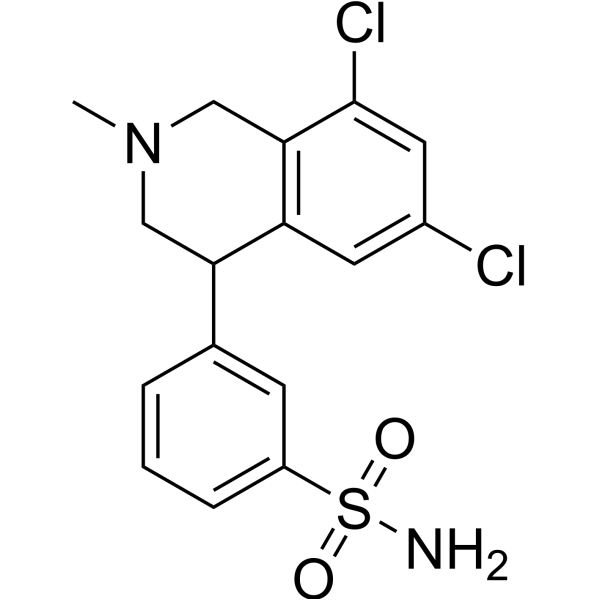 0 ImagesCat. No.: HY-151360CAS No.: 543734-50-5NHE3-IN-3 (Compound 1) is a Na+/H+ exchanger isoform 3 (NHE3) inhibitor with pIC50 of 6.2 and 6.6 against human and rat NHE3, respectively. NHE3-IN-3 shows high (98%) oral bioavailability in Sprague–Dawley rats.




